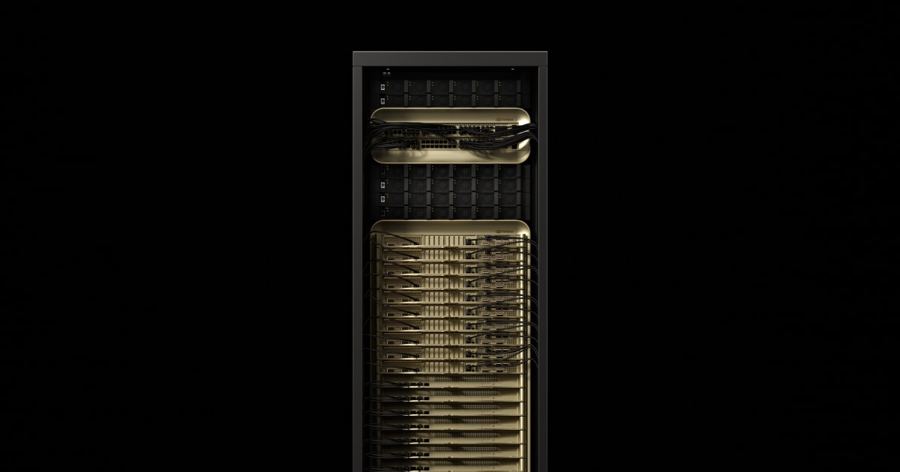
GPU hardware for training and inference.
Desktop cards through full datacenter racks, priced against current listings and specified in the terms that determine fit: GPU memory, power draw, and lead time.
- Verified specifications
- Manufacturer warranty applies
- Direct manufacturer support
- No fantasy pricing
Five NVIDIA products, priced and specified against current listings. Each spec includes a plain-language note explaining what it means for hardware selection. Unsure what you need? Use the model advisor or the guided build.
Example sizing using DeepSeek-V3.2 (671B) — pick your own model in the model advisor for exact numbers.
A normal computer spec sheet leads with CPU and RAM. For running a big AI model, skip both — they barely matter here. The model's weights load into GPU memory and run on the GPU's own cores; the CPU and regular system RAM mostly just shuttle data around and keep the machine's operating system alive. A faster CPU or more RAM will not make an undersized GPU able to hold a bigger model, and it will not speed up the model's output. That's why every product below is specced by GPU memory and watts — those two numbers, plus price, are the ones that actually decide what you can run and what it costs.
Understanding AI hardware
Five short answers to the questions that actually determine which system fits your workload. For the full mechanics, see the technical guide.
How to choose AI hardware
Start from your model's memory requirement (parameters × 1 GB, plus 20% working room) — not clock speed or a marketing FLOPS number. Pick the cheapest hardware that clears that number. If you're training rather than just running a model, budget 3–4x the memory of the raw weights for gradients and optimizer state. Budget and lead time narrow the choice from there: built-to-order enterprise hardware can take weeks to months.
Training vs. inference
Inference just runs a fixed model to produce output — it needs the model's weights plus a working buffer, and often fits on one card. Training or fine-tuning updates the weights, which means also holding gradients and optimizer state in memory — commonly 3–4x more, which is why training hardware recommendations lean toward multi-GPU servers even for models that would fit a single card for inference alone.
Why VRAM matters
A model's weights have to fit entirely in GPU memory before the GPU can run any of it — there's no partial fallback to system RAM. If a model needs more memory than a card has, that card is off the table regardless of how fast or expensive it is. This is why every product on this page leads with memory, not clock speed.
Power and cooling, explained
Watts measure electricity draw, not compute capability — a higher-watt GPU usually means more raw speed, but also a bigger power bill and more heat to remove from the room. Desktop and workstation cards use ordinary air cooling; multi-GPU servers need datacenter-grade airflow or liquid cooling; full racks like the GB300 NVL72 require a facility built for it, not an office closet.
Common mistakes
Buying based on a marketing FLOPS number instead of checking memory fit first. Sizing for inference and then discovering training needs 3–4x more memory. Ordering rack-scale hardware without confirming the facility has the power and cooling to support it. Assuming several desktop cards plugged into one PC over ordinary PCIe is a "cluster" — it isn't, and it performs far worse than real NVLink-connected hardware. Not accounting for built-to-order lead times, which can run months for enterprise-scale systems.
Simulated status display for visual effect — this is a UI demonstration, not live infrastructure telemetry.
Compare at a glance
Filter by category, sort any column, or click a row to jump to its full specs below.
| Product | Memory | Power | Price |
|---|---|---|---|
RTX 5090
Desktop card
|
32 GB |
575 W
≈0.5 homes
|
$1,999 |
RTX PRO 6000 Blackwell
Workstation card
|
96 GB |
600 W
≈0.5 homes
|
$8,565 |
8x H100 SXM server
Server
|
640 GB |
5.6 kW
≈4.7 homes
|
$250,000 |
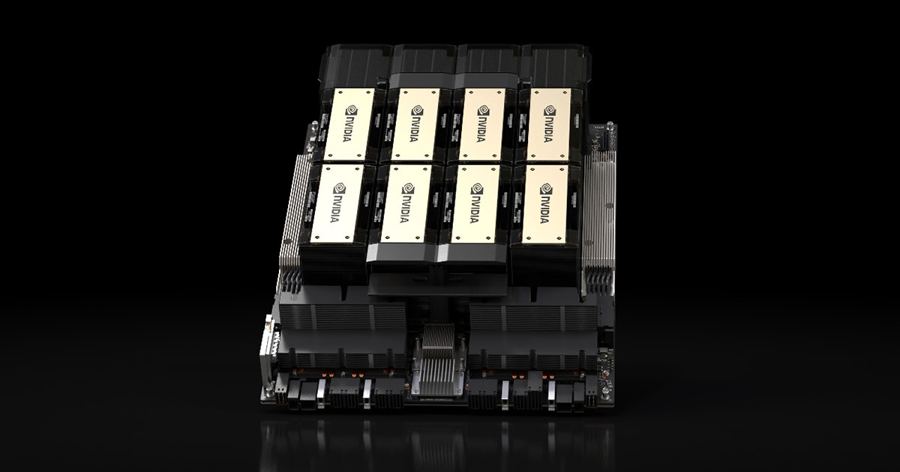
8x H200 HGX server
Server
|
1.1 TB |
5.6 kW
≈4.7 homes
|
$370,000 |
|
GB300 NVL72 rack
Rack
|
20.7 TB |
135.0 kW
≈112.5 homes
|
$3,700,000 |
By the numbers
The same real price, memory, and power figures shown above — plotted so you can see the spread at a glance. This catalog runs from a $1,999 desktop card to a $3.7M datacenter rack, so bars use a log scale: it keeps the smaller products visible instead of squashing them to a hairline next to the rack. Every label is still the real, un-rounded number.
Price
GPU memory
Power draw
Every product, in full
The same five systems from every angle above, now with complete specs and a path to a quote.
RTX 5090
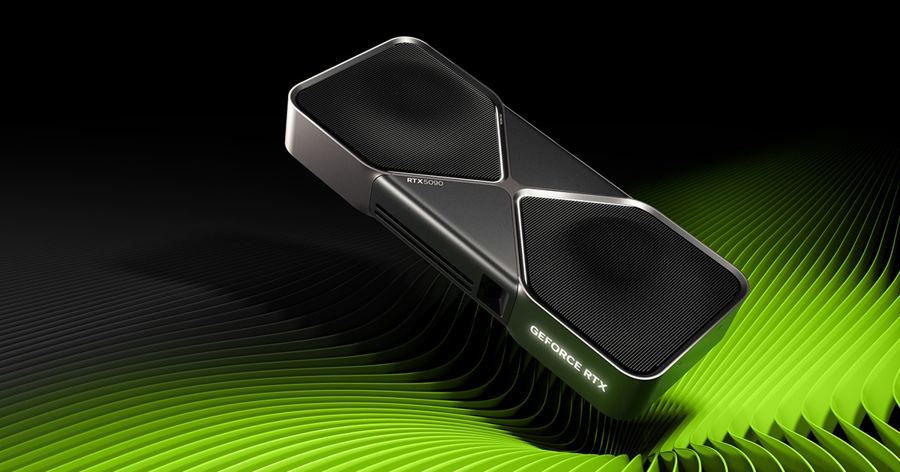
A high-end desktop graphics card. The smallest, cheapest way to get real AI horsepower on your own desk.
RTX PRO 6000 Blackwell
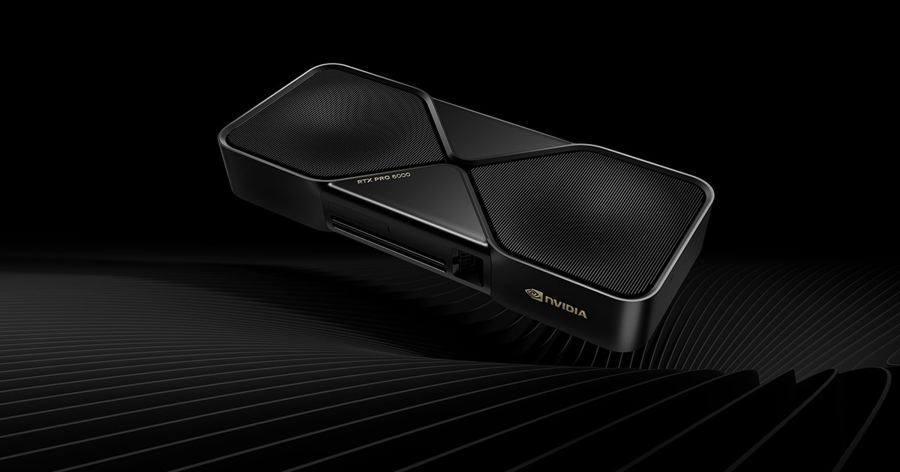
A professional workstation card built for serious AI work — three times the memory of a desktop card in the same single slot.
8x H100 SXM server
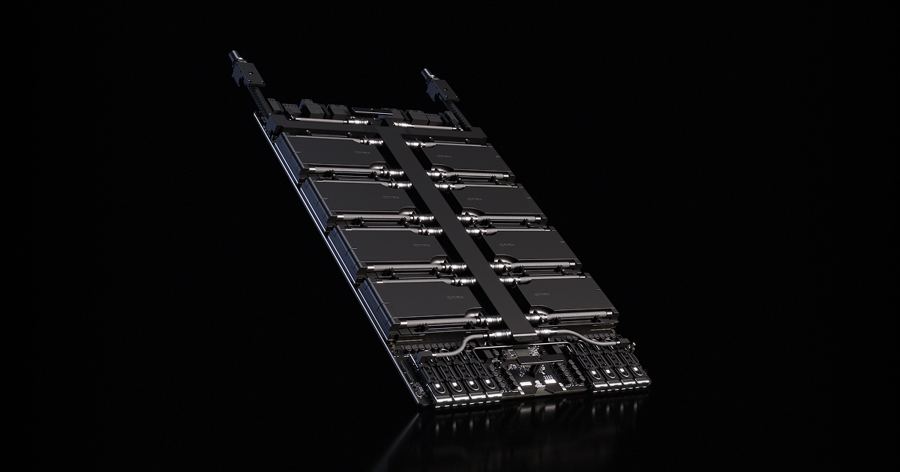
A full server with 8 H100 GPUs wired together with NVLink, acting as one large pool of memory and compute.
8x H200 HGX server
The next generation up from the H100 server — same 8-GPU NVLink design, close to double the memory per GPU.
GB300 NVL72 rack
An entire rack: 72 Blackwell Ultra GPUs wired together as a single giant machine. The top of NVIDIA's current lineup.
No products in this category
Nothing in the current catalog matches this filter. Select "All" to see every product.
RTX 5090
A high-end desktop graphics card. The smallest, cheapest way to get real AI horsepower on your own desk.
Lead time: Typically ships within 3–10 business days from authorized retailers, subject to stock.
Warranty: Manufacturer warranty applies (terms vary by reseller).
RTX PRO 6000 Blackwell
A professional workstation card built for serious AI work — three times the memory of a desktop card in the same single slot.
Lead time: Typically ships within 3–10 business days from authorized retailers, subject to stock.
Warranty: Manufacturer warranty applies (terms vary by reseller).
8x H100 SXM server
A full server with 8 H100 GPUs wired together with NVLink, acting as one large pool of memory and compute.
Lead time: Built-to-order enterprise hardware — typically an 8–16 week lead time from order confirmation, depending on allocation.
Warranty: Manufacturer warranty applies (enterprise service terms vary by reseller).
8x H200 HGX server
The next generation up from the H100 server — same 8-GPU NVLink design, close to double the memory per GPU.
Lead time: Built-to-order enterprise hardware — typically an 8–16 week lead time from order confirmation, depending on allocation.
Warranty: Manufacturer warranty applies (enterprise service terms vary by reseller).
GB300 NVL72 rack
An entire rack: 72 Blackwell Ultra GPUs wired together as a single giant machine. The top of NVIDIA's current lineup.
Lead time: Built-to-order; this is NVIDIA's highest-demand SKU, so lead times of 6 months or more are common industry-wide as of 2026.
Warranty: Manufacturer warranty applies (enterprise service terms vary by reseller).